🕯️ December Is Overwhelming
Money pressures - Family dynamics - Sensory overload.
You’re stretched thin – and your nervous system reacts before you can catch it.
If you want steadier communication, fewer explosions, less freeze, and deeper connection, this free webinar is where it begins.
FREE LIVE WEBINAR
THURSDAY 11th DECEMBER 8.00PM - 60 MINUTES ON ZOOM LONDON
From Overwhelm to Connection: How to Stop Shouting, Regulate Your Nervous System & Build Relationships That Feel Connected.
What You’ll Learn - 3 Easy To Use Tools
1. Understanding Your Sensory Sensitivities
A simple quiz to help you understand:
Why you snap, shout, or shut down
What drains your capacity
How to stay inside your “window of connection”
- Take it alone of with the whole family.
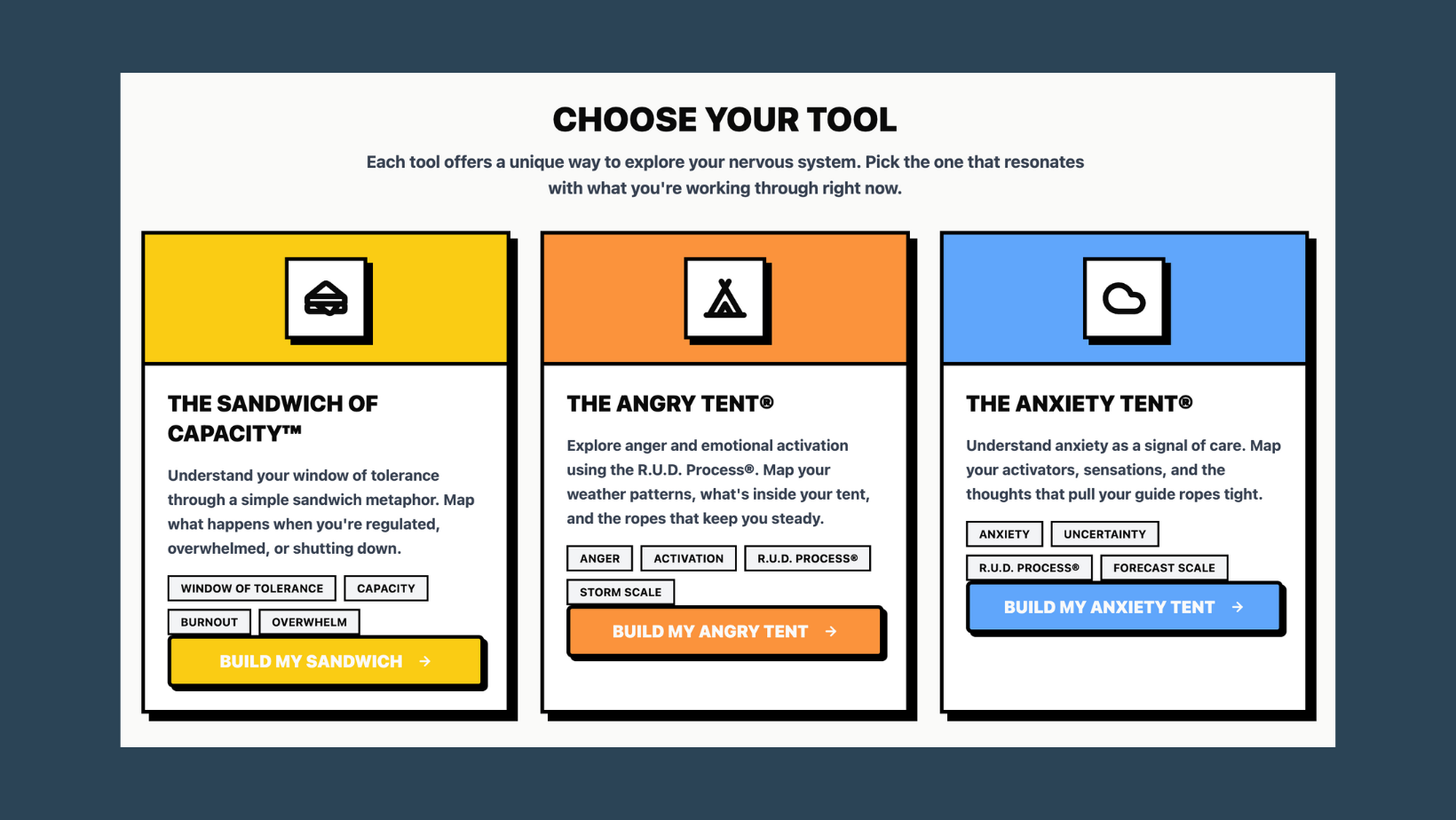
2. Your Sandwich of Capacity - (Think Window Of Tolerance Re-imagined)
A simple, visual way to understand:
why you snap, shout, or shut down
what drains your capacity
how to stay inside your “window of connection”
3. The Angry Tent® & The Anxiety Tent®
- Visual & Interactive. Understand anger before it erupts.
- Learn the cues early so you can step out of reactivity.
- Understand the connectedness of Anger & Anxiety
Perfect For You If…
- You shout or snap under stress
- You’re overwhelmed & overstimulated
- Shutdown is how you live – more “in your head”
- You want better communication
- You want tools that support neurodivergent folks
- You want a steadier, quieter December.
✨ You’ll Leave With …
- 2–3 practical, neuro-affirming tools
- A clearer understanding of overwhelm
- Immediate strategies for steadier communication
- Relief, hope, and a way forward for a peaceful festive season.
🏡 A Gentle Invitation
At the end, you’ll be invited (without pressure) into my Finding Home program – my deeper programme for nervous system regulation, communication, and connection.
FAQ
Parents
Who want steadier evenings, calmer family days, and fewer guilt-filled spirals.
Neurodivergent adults
Who want clearer capacity, fewer overload cycles, and tools that don’t rely on theory-heavy instructions.
Counsellors and therapists
Who want grounded, practical regulation tools for themselves and for clients during an intense month.
Anyone
Who knows December tends to push them out of regulation and wants something that genuinely helps.
Great – you’ll learn The Sandwich of Capacity™, my visual reimagining that’s easier to use in the moment, especially for ND
These tools are short, direct, and built for real life.
No academic jargon.
No hour-long routines.
No worksheets that gather dust.
Just practical regulation strategies you can use
in the car, between sessions, in a busy home, or during moments when everything feels too loud.
They help you stay present without forcing calm.
They help you hold your capacity without collapsing.
And they help you support the people you love without burning yourself out.
- The full live training
- A short recap sheet with the three tools
- A calmer, more regulated way into the holidays
Yes once you register – you will be sent a recording within 3 days.
No.
The tools are designed with neurodivergent minds in mind –
but they work beautifully for anyone who struggles with overwhelm, big emotions, or shouting under pressure.
Perfect – this webinar actually explains why you shut down, what your body is doing when it freezes, and how to find your voice again without pushing yourself into overwhelm.
Because December is one of the most dysregulating months of the year:
sensory overload, social pressure, disrupted routines, emotional expectations, and zero time to decompress.
Your capacity shrinks faster – and your reactions intensify.
No.
This is a watch + learn webinar.
You can participate quietly, off-camera, without speaking.
Yes.
Every tool here was designed to be visual, simple, low-cognitive load, and nervous-system friendly – perfect for ADHD, autism, AuDHD, trauma histories, or anyone who thinks in pictures and sensations.
It can if you begin applying the knowledge – not by forcing calm, but by understanding your capacity, your sensory load, and the early body cues that happen before shouting or snapping.
⭐ FAQ Version (Webpage Standard)
Where can I take the Sensory Sensitivities Quiz?
You can take it right here: https://findinghome.io/sensorysensitivities
It’s a quick, practical quiz that helps you understand which sensory systems are most sensitive for you – and why December (and life in general) can feel overwhelming.
I recommend taking it before the webinar so the tools make even more sense.
No – it’s practical psychoeducation you can use immediately. You’ll get tools, not therapy.
Very gently.
You’ll be invited to my Finding Home™ program
–
but there’s zero pressure.
Take the tools, use them, and leave if that’s all you need.
Yes – it’s trauma-sensitive, regulation-focused, and grounded in safety, not exposure or emotional digging.
About Your Host

Yasmin is a BACP Accredited trauma and relationship counsellor and the creator of multiple nervous-system tools used widely in the counselling community, including the The R.U.D Process®, The Empty Chair Cards, Sandwich of Capacity™, Angry Tent®, and Anxiety Tent®.
She is also founder of a number of trauma-informed, wellbeing programs including the Glad We Talked® , The Homestead Model™ and Finding Home™ programs.
She is dyslexic, ADHD, and autistic (diagnosed later in life) which means her work is designed for brains that are overwhelmed by jargon, long explanations, and clinical language that doesn’t land.
Her tools are visual, simple, and immediately usable for neurodivergent adults, stressed parents, and practitioners who want clearer and accessible ways to help the people they support.